


Corporate Catering
How to Plan a Corporate Event in the Bay Area
The Bay Area audience has experienced extraordinary things. A corporate event that impresses in another city barely registers here. Here’s what actually makes them succeed.
Planning a successful Bay Area corporate event comes down to seven things: defining the event’s purpose before logistics, choosing a venue that reflects your brand, investing in catering since it’s what guests remember most, building a generous timeline, briefing the service team as thoroughly as the program team, confirming every detail in writing, and working with a caterer who has real experience in this specific market.
The Bay Area’s corporate event landscape is unlike anywhere else in the country. The audience — technology executives, investors, global clients, and high-performing teams — has experienced extraordinary things. A corporate event that would impress in another city barely registers here. The bar is high, the expectations are specific, and the margin for a generic experience is essentially zero.
Whether you are planning a client dinner for fifteen, a team celebration for three hundred, or a multi-day conference with hosted meals, this guide covers what actually makes Bay Area corporate events succeed.
01Define the Purpose Before You Plan Anything Else
The single most common mistake in corporate event planning is moving to logistics before defining the purpose. A client entertainment dinner has a different objective than a team milestone celebration. A product launch reception has a different energy requirement than a holiday party. The purpose of the event should drive every subsequent decision — venue, menu, service style, room flow, entertainment, and timing.
Ask the question explicitly before you begin: what do we want attendees to feel when they leave? Impressed? Valued? Connected? Celebratory? The answer shapes everything else.
02Choose a Venue That Reflects the Brand
In the Bay Area, venue choice is a statement. A rooftop in SoMa signals something different than a private dining room in the Financial District. A vineyard in the Wine Country signals something different than a contemporary event space on the Peninsula. Choose a venue whose aesthetic is consistent with your company’s positioning — and that has the infrastructure to support the type of event you are producing.
Key infrastructure questions: What is the kitchen situation — is it a full prep kitchen or a staging area? What are the loading and vendor access hours? What is the noise ordinance? Is there a preferred vendor list, and if so, does your caterer work with the venue?
Visit the venue with your caterer present, not separately. A walkthrough together surfaces kitchen and logistics issues that neither party would catch alone.
03Invest in the Catering — It Is What Guests Remember
In post-event surveys and in conversation at the event itself, food and service are what guests remember. Not the flowers. Not the projection mapping. Not the cocktail napkins. The quality of what was served, the attentiveness of the service team, the moment a course arrived perfectly timed to the room’s energy — these are the details that become the story people tell afterward.
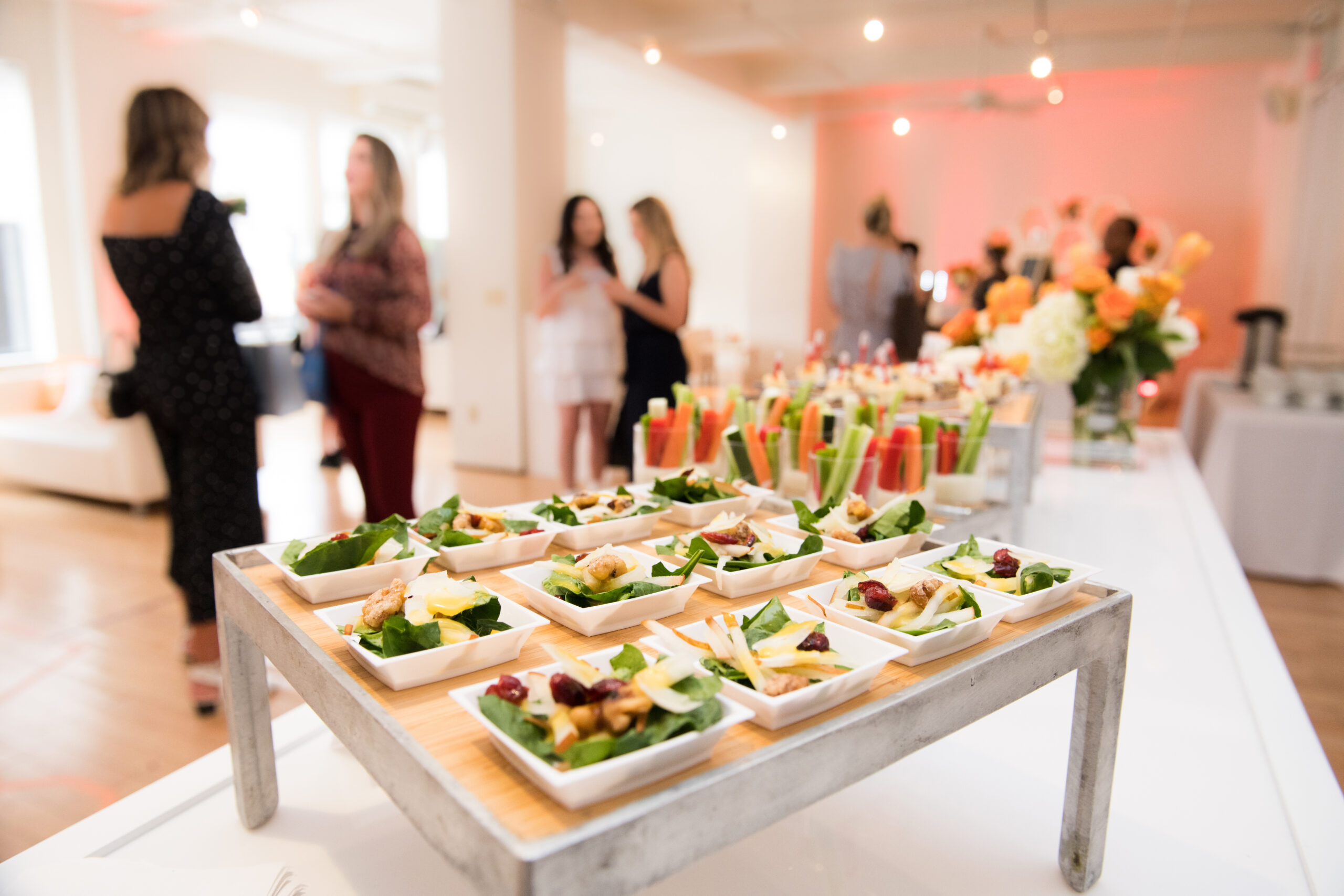
For Bay Area corporate events, this means investing in a caterer with genuine culinary range and professional service staff. Continental has brought the same artistry to corporate events that we apply to our most celebrated weddings — because your clients and your team deserve an evening that feels like it was designed for them.
04Plan the Timeline With More Buffer Than You Think You Need
Corporate events are sensitive to timing in a way that social events are not. An executive who arrived for a 7pm dinner will not gracefully absorb a 30-minute delay in the first course. A product announcement scheduled for 8:15 cannot slide. Build a working timeline that includes: venue access time, caterer load-in and setup, guest arrival window, service sequence, program timing, and breakdown.
Give every element more time than you expect it to need. Rehearse the transitions with the venue and catering team before the day. A corporate event that runs like clockwork is the product of a timeline that was built with precision and rehearsed with intention.
05Brief the Service Team as Thoroughly as the Program Team
The service staff at your corporate event are as important as the program. They are the people your guests interact with most — and their professionalism, warmth, and attentiveness set the tone for the evening. Provide the service team with a full brief: guest list overview, any VIP table notes, dietary requirements, program timing so they can coordinate courses, and any specific protocol for how the host would like the event to feel.
A catering team that has been properly briefed moves through a room with intention. They are present when needed, invisible when not, and they never disrupt a conversation to clear a plate.
06Confirm the Details in Writing — Every One of Them
The professionals who plan Bay Area corporate events know that verbal agreements disappear under the pressure of event week. Confirm in writing: the final guest count and any flex window, the menu and any dietary accommodations, the equipment included in the proposal, the timeline agreed with the venue, the staffing ratio, overtime provisions, and the breakdown responsibilities.
A full-service catering partner manages this documentation as part of the engagement. It is part of what “full-service” means — the logistics are managed, not delegated back to the client.
07The Difference That 30 Years Makes
Corporate event planning in the Bay Area rewards experience. A catering team that has managed hundreds of events in this market — at this city’s venues, for this city’s audiences — brings a reservoir of institutional knowledge that no amount of research replicates. They have met the unexpected before. They have solved the problem you do not yet know you have.
Continental has been the catering partner for Bay Area corporate events for over three decades — from intimate client dinners to large-scale receptions — because our clients return. The best evidence of a corporate catering partner’s quality is whether the people who have worked with them come back.
Key Takeaways
- Define the purpose of the event before making any decisions about venue, menu, or format.
- Choose a venue whose aesthetic matches your brand and has the infrastructure to support your event.
- Catering is what guests remember most — invest there before flowers or entertainment.
- Build more buffer into the timeline than you think you need, and rehearse transitions in advance.
- Brief the service team as thoroughly as the program team — they interact with guests the most.
- Get every detail confirmed in writing: guest count, menu, equipment, timeline, and staffing ratios.
Frequently Asked Questions — Bay Area Corporate Events
What makes corporate event catering in the Bay Area different from other markets?
Bay Area corporate audiences — technology executives, investors, global clients — have high baseline expectations shaped by years of premium events. Generic catering rarely impresses. The market rewards culinary range, professional service, and events that feel specifically designed rather than off-the-shelf.
What questions should I ask a corporate caterer before signing?
Ask about their experience with your event size and format, which Bay Area venues they have worked with, how they coordinate service timing with the program team, what is included in the proposal versus priced separately, and for references from comparable corporate engagements.
How far in advance should I book catering for a Bay Area corporate event?
For large-scale corporate events at premier Bay Area venues, booking 6 to 12 months out is advisable. For smaller client dinners or team events, 3 to 6 months is typically sufficient, though the most sought-after caterers book quickly across all event sizes.
How should I choose a venue for a Bay Area corporate event?
Choose a venue whose aesthetic matches your company’s positioning and that has the infrastructure to support your event format. Key questions include the kitchen setup, loading and vendor access hours, noise ordinances, and whether a preferred vendor list applies.
What is the biggest mistake companies make planning a corporate event?
Moving to logistics before defining the event’s purpose. A client dinner, a team celebration, and a product launch each require a different energy, format, and catering approach. Defining what you want attendees to feel should come before any vendor decisions.
Your team and clients deserve an evening that feels like it was designed for them.
Continental brings the same artistry to corporate events that we apply to our most celebrated weddings. Let’s begin with a consultation.